Three cannabinoid studies from this summer, and what they show
A placebo-controlled trial for burning mouth syndrome, a crossover study in autistic children, and cell-culture work on UVA skin damage - read against the checks that separate a finding from a headline.
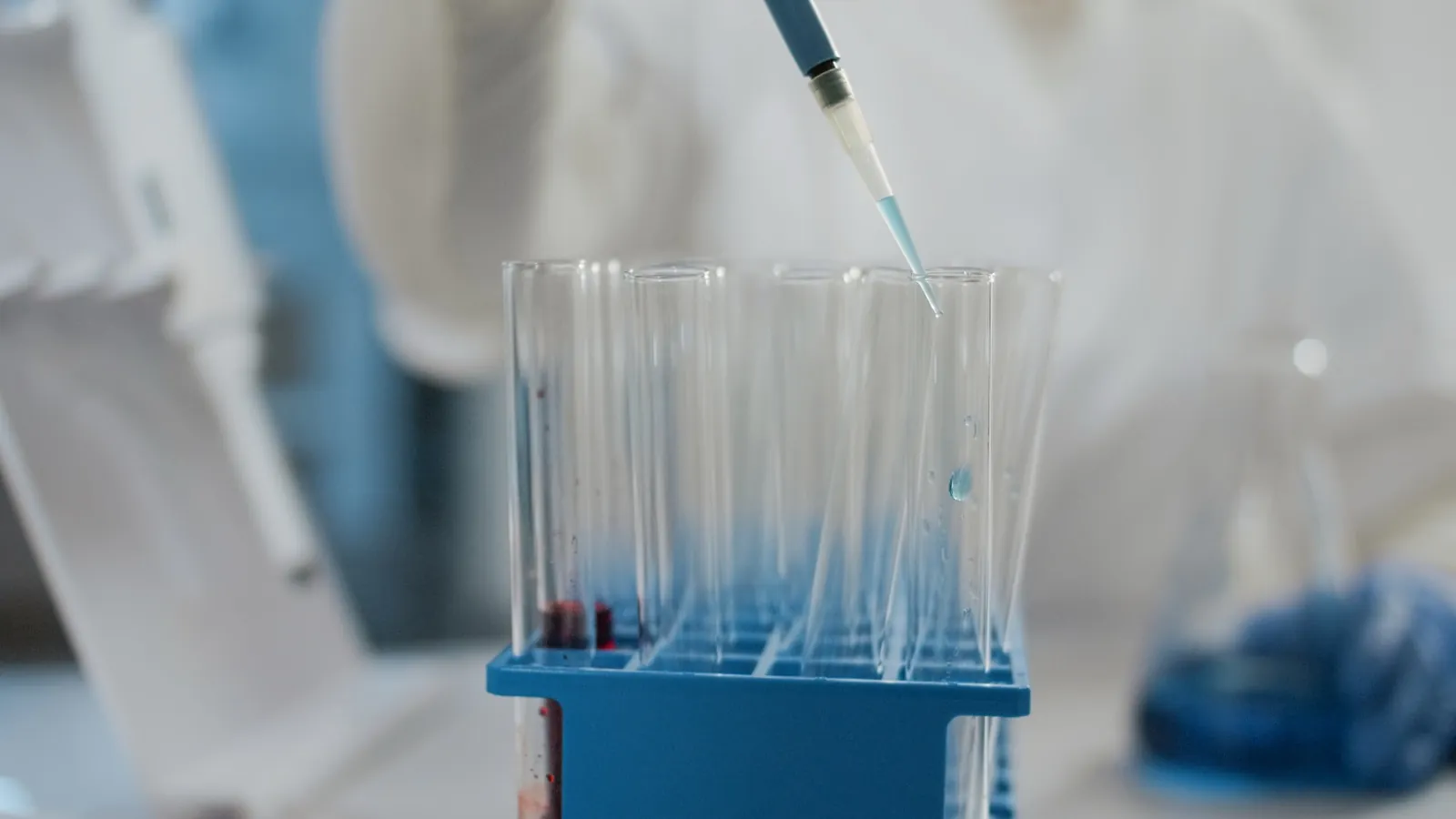
A researcher transferring liquid with a micropipette.
We laid out six checks for reading cannabinoid research before believing the headline: dose versus the shelf, sample size and duration, species and setting, endpoint substitution, what was actually administered, and funding and registration. Three studies published this summer are a useful test of that framework, because each one is genuinely informative and none of them is the breakthrough a press release would make it sound like.
Full-spectrum CBD for burning mouth syndrome
Researchers at the Federal University of Paraná in Brazil ran a randomized, placebo-controlled trial of full-spectrum CBD oil against an avocado-seed-oil placebo in 26 adults with burning mouth syndrome, a chronic condition with no identifiable lesion or cause. Thirteen participants per arm completed the study, published in Oral Surgery, Oral Medicine, Oral Pathology and Oral Radiology.
Dosing started at 10 mg per day - two drops, twice daily - and was titrated up to a range of 10 to 50 mg per day where symptoms persisted and no adverse effects appeared. The CBD group showed significant, progressive reductions in both pain intensity and pain impact, with no adverse effects reported.
Run it through the checklist: the dose sits in a range a retail tincture can plausibly deliver, which is not always true of cannabinoid trials. The design was single-blind - participants did not know their assignment, but the study was not double-blind - and the sample is small, thirteen per arm, which leaves real room for chance to be doing some of the work. A clinically interesting signal, not a settled finding.
CBD and social relating in autistic children
Two separate trials on CBD in autism spectrum disorder reported results this year, and the contrast between them is the more useful lesson. A randomized, double-blind, placebo-controlled crossover trial published in Autism Research gave oral CBD oil containing terpenes to 29 children aged 5 to 12, and reported significant improvements in secondary measures - social relating, anxiety, and parental stress. Note the word secondary: this is the endpoint-substitution check from our framework in practice. Whatever the trial’s primary endpoint was, the headline-worthy result showed up in a measure the study was not necessarily powered to detect, which is exactly the kind of gap worth reading past.
A separate open-label Phase 2 trial at NYU Grossman School of Medicine gave 23 pediatric patients CBD at 3, 6, or 9 mg/kg/day over six weeks, with the highest dose group showing a 62% response rate on target symptoms. Open-label means no placebo arm and no blinding - useful for establishing tolerability and a dose-response signal, much weaker for establishing that CBD itself, rather than expectation or attention, produced the improvement.
Both studies point the same direction. Neither one, alone, is strong enough evidence to act on - which is the honest read the site’s own framework asks for, not a dismissal of either.
CBD and CBG against UVA skin damage
The most preliminary of the three: researchers from the Medical University of Bialystok and Croatia’s Boskovic Institute, publishing in Antioxidants, exposed normal melanocytes and SK-Mel-5 melanoma cells to UVA radiation - which roughly doubled reactive oxygen species in both cell types - then treated the cells with CBD, CBG, or the combination. Both cannabinoids helped restore redox balance, with the combination showing an enhanced effect over either alone.
This is a cell-culture study. It says nothing directly about what a topical CBD product does on human skin exposed to UVA, and the researchers themselves frame it as supporting further study rather than any protective claim. It is the clearest example of the species-and-setting check in this group: legitimate early-stage science, several steps removed from a claim anyone should put on a label.
None of these three studies is individually practice-changing, and none should be read as one. What they show together is where the pipeline is pointed next - oral pain conditions, pediatric neurodevelopmental symptoms, and dermatology - three indications with real unmet need and, so far, small trials with real limitations. That is what the current state of the evidence looks like, described honestly.
The pattern worth tracking
Cannabinoid research keeps moving into new indications faster than the trial sizes are growing. That is not a criticism of any individual study - it is a description of a young field with more hypotheses than funding for large trials. We will keep applying the same six checks as new results land, and keep saying plainly when a finding does not yet support the claim being made about it.
Editorial content only. This article is reporting and analysis, not medical, legal, or investment advice. Hemp and CBD regulations differ by state and change frequently. Verify current rules in your jurisdiction before making decisions.